Based on Your Answers, You are Considered for Colorectal Cancer
Colonoscopy or Non-Invasive Tests
Why Screening in Average Risk is Important
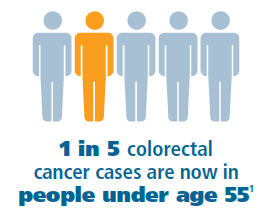
Widespread Impact: Even for those at average risk have a 4-4.5% chance of colorectal cancer in their lifetime. Roughly 1 in 23 men and 1 in 25 women will develop colorectal cancer, with increasing rates being seen in younger individuals.
Prevention Power: Regular screening can prevent up to 60-70% of colorectal cancers by detecting and removing precancerous polyps before they develop into cancer.
Early Detection Saves Lives: When colorectal cancer is caught at an early stage, the 5-year survival rate exceeds 90%, significantly improving treatment outcomes.
National Guidelines Endorse Screening: The American Cancer Society and other leading organizations recommend starting screening at age 45 for average-risk individuals to ensure early detection and prevention.
Comprehensive Benefits: Screening not only identifies existing cancers but also prevents future cases by allowing for the immediate removal of abnormal growths during procedures like colonoscopy.

Screening Options Comparison
| Feature | Colonoscopy | Cologuard |
|---|---|---|
| Method | Direct visualization using colonoscopy | Indirect detection via a stool-based test |
| Detection of Cancer | Detects nearly 100% of colorectal cancers | Detects 92% of colorectal cancers |
| Detection of Advanced Precancerous Lesions | High sensitivity; identifies and allows immediate removal of high-risk adenomas | Moderate sensitivity; detects only about 40% of high-risk lesions |
| Screening Interval | Every 10 years if normal | Every 3 years if negative |
| Follow-Up Requirement | No additional procedures needed if results are normal | Positive tests require a follow-up colonoscopy |
Colorectal Screening Options
Colonoscopy
FIT + mt-sDNA (Cologuard)
Pros:
- Non-invasive: completed at home without the need for a driver or day off of work
- Convenience: Does not require a bowel prep or any changes to medications.
- Best non-invasive option: Improved sensitivity compared to other stool or blood based tests
- Covered: Most insurance carriers cover preventative screening 100%, including non-invasive tests.
Cons:
- Missed cancer detection: Although sensitivity is improved, it can still miss 1 of every 12 colorectal cancers
- Missed advanced precancerous lesions: Does not accurately detect advanced precancerous lesions (APL) that are high risk of turning into colon cancer
- More frequent screening interval
- If positive, requires second test (colonoscopy) to complete the screening process
Pros:
- The Gold Standard: Detects nearly all cases of colorectal cancer
- Prevents Colorectal Cancer: Detects and removes nearly all advanced precancerous lesions (APL) that are high risk of turning into colon cancer
- 10 year screening interval if the exam is normal
- Covered: Most insurance carriers cover preventative screening 100%, including colonoscopy and associated costs.
Cons:
- Prep: Requires a laxative bowel prep and in some cases, modification of home medications.
- Diet: Requires dietary changes, including a clear liquid diet in the pre-procedure period
- Invasive: Utilizes sedation for comfort, which requires the day off of work and inability to operate heavy machinery.